


Castel San’Angelo

Castel San’Angelo
Castel San’Angelo (Lungotevere Castello 50, Rome) – this fortress, with the Tiber River behind it, was originally built as a mausoleum for the Roman emperor Hadrian (AD130-139). It later became a prison and even served as a papal residence (which was useful for the Pope during times of danger and warfare). The National Museum of Castel Sant’Angelo within this structure contains various exhibits ranging from Renaissance paintings and pottery to antique military weapons. Admission: €7 (adult), €6 (reduced). Hours: daily 9am-7pm (April-September), and 9am-2pm (October-March).
Capitoline Museums
Capitoline Museums
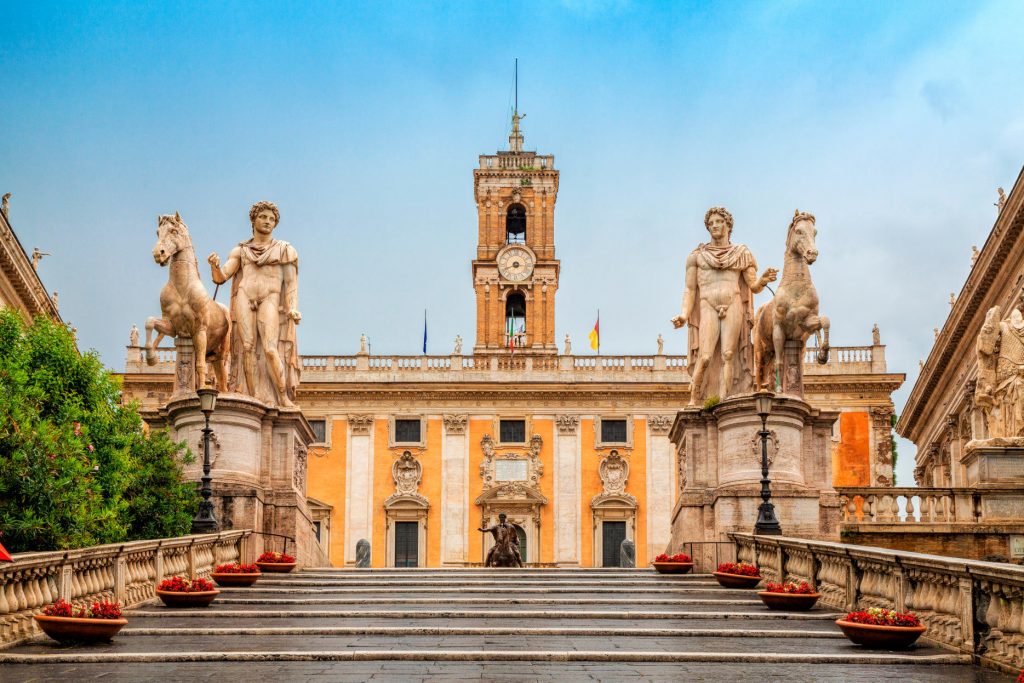
Capitoline Museums (Piazza del Campidoglio 1, Rome) – these are art and archeological museums located at the Piazza del Campidoglio (on top of Rome’s Capitoline Hills in this city). They are presently located in two buildings: Palazzo Nuovo (containing fine selections of Greek and Roman sculptures), and Palazzo dei Conservatori (once the seat of the city’s magistrates, it now displays paintings by Veronese, Tintoretto, Caravaggio and Van Dyck. Outside the palace, the ‘She Wolf’ with Romulus and Remus can be found. Admission: €7.80 (for both locations). Hours: Tuesday to Sunday, from 9.30am – 8pm. See its website for more details: www.museicapitolini.org
Venice
Venice
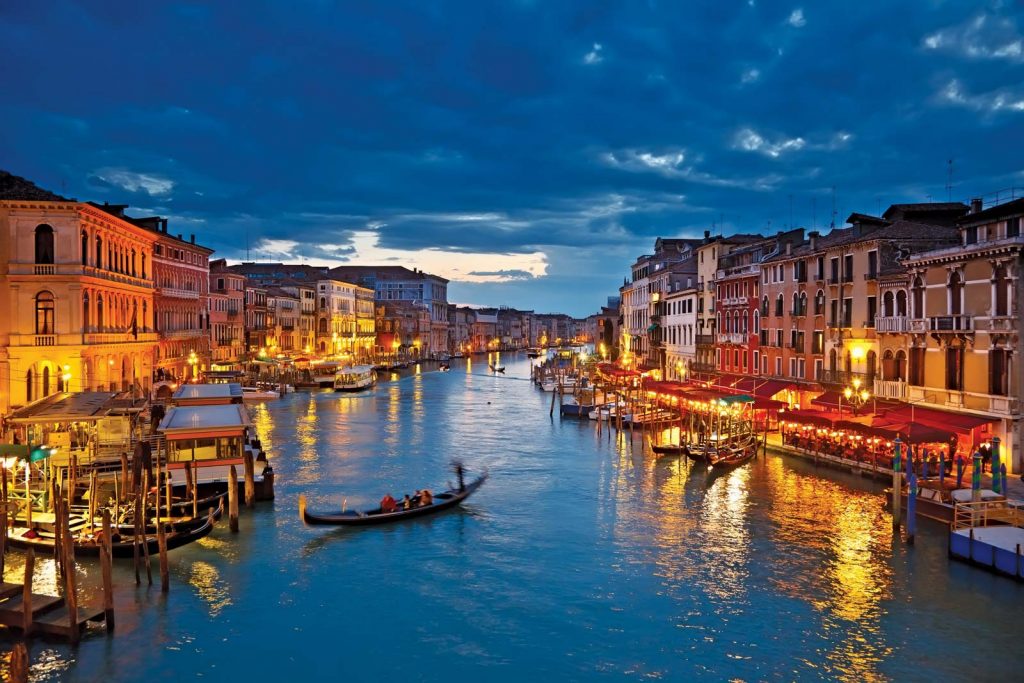
Venice – located in northeast Italy, on a group of 118 small islands separated by canals (often linked by bridges), Venice is another Italian city which rose in prominence during the medieval period, when it was the capital of the Republic of Venice (a major maritime power during those days). Much of the local architecture that exists today were constructed during that period (reflecting the wealth that Venice once wielded). Of course, due to the city’s construction on shallow areas facing the Adriatic Sea, it experiences frequent periods of flooding. One of the locals’ means of transportation between different parts of the city (gondolas) have become a tourist attraction unto themselves.
Rome
Rome
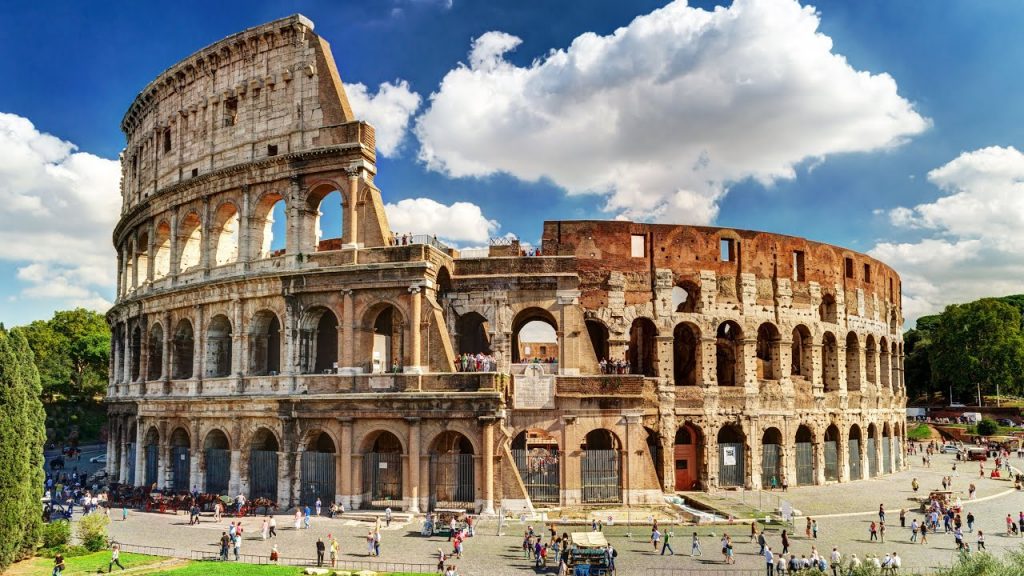
Rome — located in Lazio in central Italy and facing the Tyrrhenian Sea, the province (and city) of Rome boasts a Mediterranean climate both on the coast and further inland. The coast stretches from north to south, from the area including Fiumicino (where the international airport is) and the towns overlooking Lake Bracciano, the largest in the province, to the border with the province of Latina.
Over the centuries, Rome has exerted political, cultural and/or spiritual influence, whether during the Roman Empire years (when it occupied areas as far east as Israel & Lebanon, as far south as Libya, as far west as Spain, and further to the northwest into England); during the Renaissance, when artists like Leonardo DaVinci and Michelangelo marveled the world with their artwork and innovations; and over the centuries, when the Vatican (the seat of the Roman Catholic Church) has long provided spiritual guidance to the Church’s followers.
Rome became the capital of Italy as a result of the unification of the various states within the Italian Peninsula (from the Savoy – facing the Alps, to Sardinia, to Sicily), which took place in 1861, thanks in part to efforts by political figure Giuseppe Garibaldi. Since then, aside from sights dating back to both the Renaissance period (e.g. St. Peter’s Basilica at Vatican City) and the Roman Empire (e.g. the Colosseum), more recent touristic attractions are found toward the outskirts of the city as a result of dictator Mussolini’s failed efforts to bring back the Roman Empire during the early 20th century. Buildings constructed during that time had Fascist architectural style, particularly within the southwest suburb of the city known as EUR (Esposizione Universale Roma) – which later became Italian government buildings and museums. Tourists fly direct into Rome, or arrive by rail or car from elsewhere see these sights and more.
Palermo
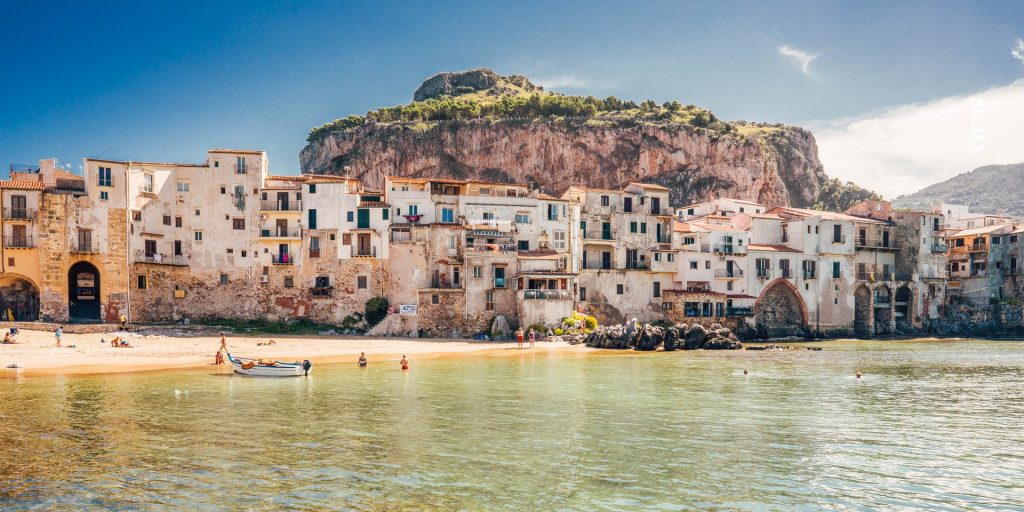
Palermo
Palermo – known as the capital of the autonomous region of the island of Sicily and the province of Palermo, this city goes back even further than the Roman Empire – having been first established by the Phoenicians in 734 BC. Palermo and the rest of Sicily had the distinction of having been invaded by various powers – from the Romans (and the Byzantine Empire immediately afterwards), to the Arabs (becoming the Emirate of Sicily), the Normans, and later becoming part of the Kingdom of the Two Sicilies (which included southern mainland Italy), before becoming part of a unified Italy during the 1860s.
All this is relevant to visitors touring Palermo, since they will likely run into architecture from these historic eras. Even the local cuisine has influences from these periods (as well as the local open air markets, which have an Arabic “souk”-like quality to them). Tourists are just as attracted to the city’s culture and cuisine as they are the sights. Since Palermo isn’t really a tourist-driven city, visitors find themselves having to search for many sights independently, while enjoying local snack foods and lemon ices (which are in huge demand, due to the Mediterranean temperatures there).
Naples
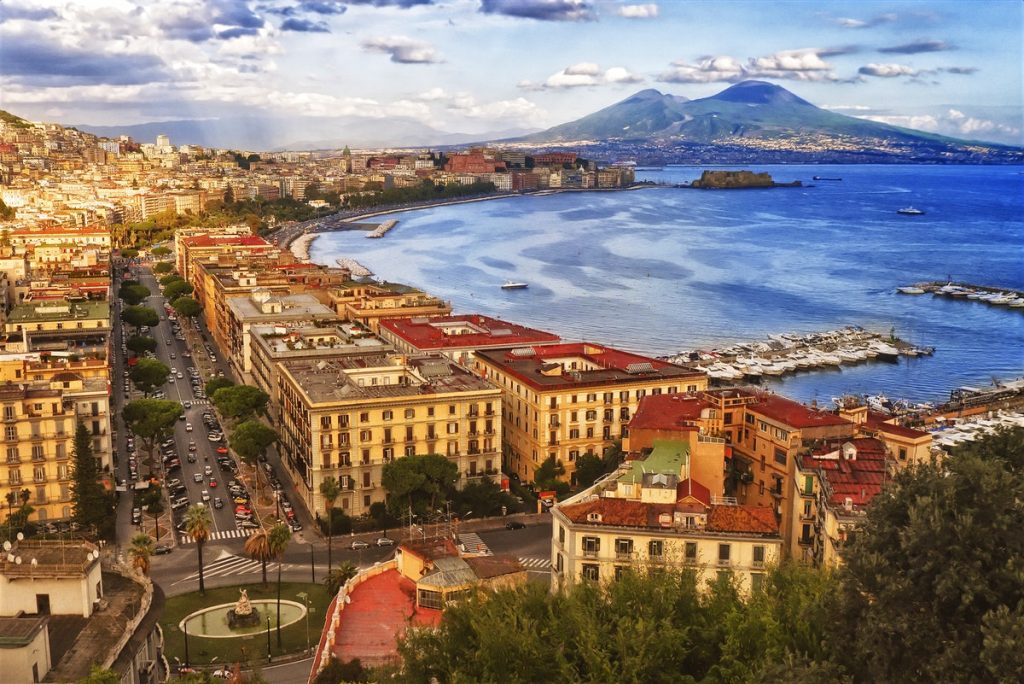
Naples
Naples – this is Italy’s third-largest city, located within the Campania region just two hours south of Rome. Its Italian name (Napoli) originally came from the Greek word Neapolis (which means “new city”). Unlike Milan (which is the de facto center of modern Italy), Naples’ history goes back to Ancient Greece – when it became a Greek trading outpost some centuries before the rise of the Roman Empire. The city’s Roman period is best remembered by the remains of the city of Pompeii (which was destroyed by the eruption of Mount Vesuvius during the year 79 AD).
Located on the coast on the northern edge of the city is the Bay of Naples — one of the most beautiful bodies of water in the country. Its harbor is the most important port in Southern Italy. To this day, Mount Vesuvius dominates the city skyline. Tourists will notice Medieval structures like the Castel Nuovo – which will remind historical observers of the years before Italian unification, when the Kingdom of Naples ruled over southern Italy. Aside from these and other sites, tourists will likely be charmed by the area’s local cuisine, recalling in particular the fact that Naples was the birthplace of pizza (now the world’s most famous fast food).
Milan
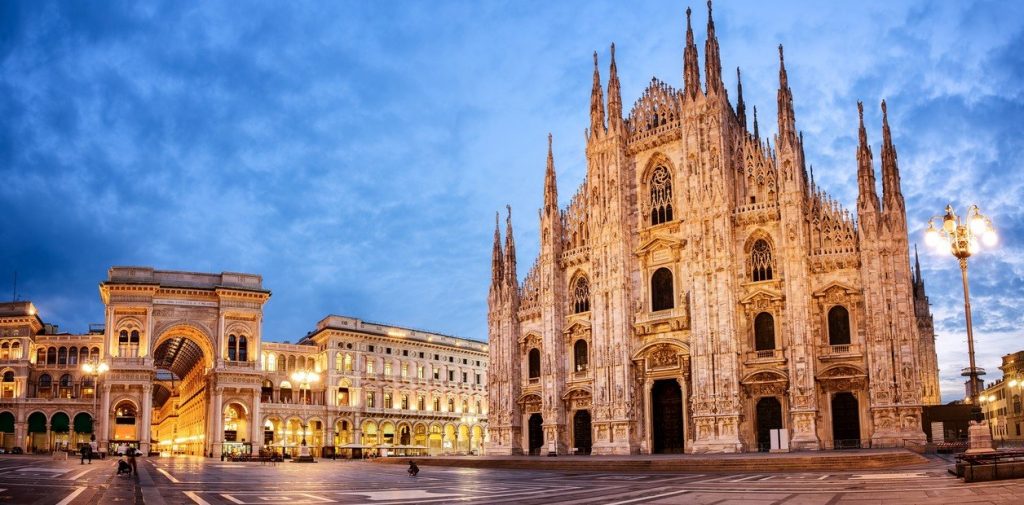
Milan
Milan – located in the heart of the Lombardia region, Milan is the country’s second largest city, and earned its reputation as Italy’s commercial & banking capital going back to the Middle Ages. More recently, during the early 20th century, Milan led the country’s industrialization efforts. The end of World War II reinforced this, with the local business district hosting the Italian Stock Exchange, and becoming the headquarters of the country’s largest national banks & companies. IN more recent times, it became a major world fashion and design center (where major brand like Armani, Versace, and Dolce & Gabbana are located).
Florence

Florence
Florence – located in Italy’s fabled Tuscany region, travelers the world over are attracted to this city to celebrate its cultural heritage, which came to rise during the Renaissance period. Florence’s museums, palaces, and churches house some of the greatest artistic treasures in the world. The most popular and important sites in Florence include the Cathedral, the Baptistery, the Uffizi, the Bargello, and the Accademia. The churches of Santa Maria Novella and Santa Croce double as art galleries, and the library of San Lorenzo has a magnificent exhibition of Michelangelo’s architectural savvy.
Walk through some of the cobble-stoned streets in the city until you arrive at the Arno River, cross the Ponte Vecchio, and familiarize yourself with the more recently-deelope area of Florence: the Oltrarno. Also, see the vast and varied art collection housed in the Pitti Palace. Along with visiting museums and monuments, you can go outdoors, and spend a day at the Boboli Gardens or climb the hill to the church of San Miniato al Monte to experience an enchanting view of Florence.
About Italy

Italia
Italy — the Italian Republic — is a boot-shaped peninsula extending from the southern edge of Europe into the Mediterranean Sea. It includes the two large Mediterranean islands of Sicily and Sardinia, as well as the independent enclaves of San Marino and the Vatican City.
Acknowledged for its vital place in the development of Western civilization, Italy is recognized for the magnificence of its ancient cities and towns, Ancient Roman ruins and unparalleled public works of art dating from the Renaissance period. Italy’s rich cuisine is world-renowned, and its wines are sought after by connoisseurs the world over. Sailing is a popular outdoor activity on Italy’s extensive coastline, and water sports are available at all the larger resorts. Although Italy is viewed as a summertime playground, the Italian Alps offers world-class skiing in the winter, along with rock-climbing, mountaineering, white-water rafting and hiking year-round.
The city-states (from Venice to the Kingdom of the Two Sicilies) which preceded modern Italy made a rich and lasting contribution to Western civilization in many different areas. The concept of a unified Italy as it exists today is a relatively recent one. The state of Italy was first organized as a constitutional monarchy under King Victor Emmanuel II in 1861, with Rome joining in 1870. In 1922, the Fascist party led by Benito Mussolini began to take an ever-increasing amount of control over the country, eventually leading to a grand defeat during World War II. The modern Italian Republic was formed in 1948. Italy was a founding member of both the North Atlantic Treaty Organization and is a major member of the European Union (EU).
Italy — the Italian Republic — is a boot-shaped peninsula extending from the southern edge of Europe into the Mediterranean Sea. It includes the two large Mediterranean islands of Sicily and Sardinia, as well as the independent enclaves of San Marino and the Vatican City.
Acknowledged for its vital place in the development of Western civilization, Italy is recognized for the magnificence of its ancient cities and towns, Ancient Roman ruins and unparalleled public works of art dating from the Renaissance period. Italy’s rich cuisine is world-renowned, and its wines are sought after by connoisseurs the world over. Sailing is a popular outdoor activity on Italy’s extensive coastline, and water sports are available at all the larger resorts. Although Italy is viewed as a summertime playground, the Italian Alps offers world-class skiing in the winter, along with rock-climbing, mountaineering, white-water rafting and hiking year-round.
The city-states (from Venice to the Kingdom of the Two Sicilies) which preceded modern Italy made a rich and lasting contribution to Western civilization in many different areas. The concept of a unified Italy as it exists today is a relatively recent one. The state of Italy was first organized as a constitutional monarchy under King Victor Emmanuel II in 1861, with Rome joining in 1870. In 1922, the Fascist party led by Benito Mussolini began to take an ever-increasing amount of control over the country, eventually leading to a grand defeat during World War II. The modern Italian Republic was formed in 1948. Italy was a founding member of both the North Atlantic Treaty Organization and is a major member of the European Union (EU).
Barberino Designer Outlet

Barberino Designer Outlet
Barberino Designer Outlet (Via Meucci snc, Barberino di Mugello) –– owned by the London-based shopping center chain McArthur Glen Designer Outlets, and located 30 km north of Florence (via Autostrada A1), this is a more upscale shopping experience, for both locals and visitors, offering discounts (of as much as 70%) for much of the merchandise sold here. Retailers present here include: Adidas, Bose Calvin Klein, Diesel, Desigual, Dolce & Gabbana, Frette, Guess, Lacoste. Lee, Levis, Missoni, Prada, Puma, Timberland, Wrangler, etc.
Along with the shopping, this shopping center also offers entertainment, particularly during the Summer, when it holds its “Summer Music Festival”, with live appearances by Italian and international pop singers.


